
The Week We Lost Nothing: The 8 Things That Gave Everything a Home
Two people who lose something on every trip went to Barcelona for a week and came back with all of it. The passports, the small stuff, the bag, the hotel room.
8 products8 min read
The charger we left in Lisbon, the glasses we left in Porto
We lose things. Not dramatically — nobody has ever stolen anything from us — but steadily. Last year’s trip cost us a laptop charger that stayed in a hotel socket in Lisbon, a pair of reading glasses left on a cafe table in Porto, and a bank card that fell out of a back pocket somewhere between the two.
None of it was expensive. All of it was annoying, and the reason was embarrassing: things didn’t have a place to go back to. The charger lived in the wall. The glasses lived wherever they were last used. The card lived in a pocket with a receipt and a coin.
So before a week in Barcelona, a city with a reputation for separating tourists from their belongings, we built a system: a home for the documents, a home for the small stuff, a bag that holds the homes, and a routine for the hotel room. This is that week, in the order each piece earned its keep.
5 a.m. — the taxi to the airport
The first thing you can lose on a trip is the trip itself. We have both had the moment in the taxi where you cannot find a passport you know you packed, and this time there would be exactly one place to look.
The one place the passports lived
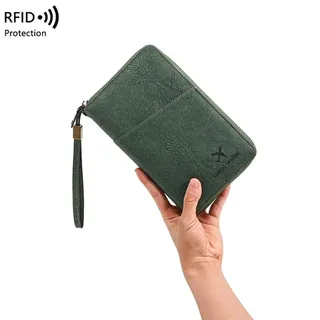
The RFID-blocking passport and document organiser, about $12, is a zipped wallet the size of a paperback with slots for two passports, boarding passes, four cards and a pen, in soft green fabric with a wrist strap. Both passports went in the night before, and in the taxi, at security, at the gate and at the hotel desk, one of us reached into the same pocket of the same bag and found the same green wallet. The lining blocks card skimming, which we did not test and were glad of anyway. It is a wallet, not a folder: the printed hotel confirmation had to be folded in four to fit.
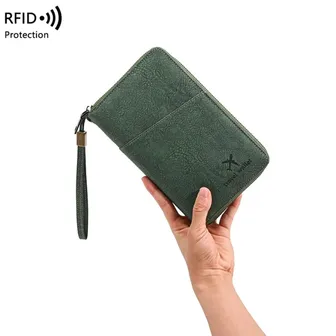
RFID-Blocking Passport & Travel Document Organiser
$11.75
The cards that never came all the way out
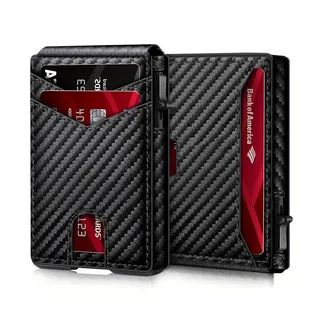
The carbon-fibre RFID pop-up card holder, about $14, is a slim metal case with a lever on the side; press it and your cards fan up in a staircase so you take the one you want and push them back without opening anything. The bank card we lost last year fell out of a pocket. This time, paying for coffee meant the card came up a centimetre, tapped the reader and went back down, and the holder went back in the same bag pocket. It takes six or seven cards and a few folded notes under a magnetic flap, and nothing else; coins went into the sling’s front pocket, the only place in the system that ever got untidy.
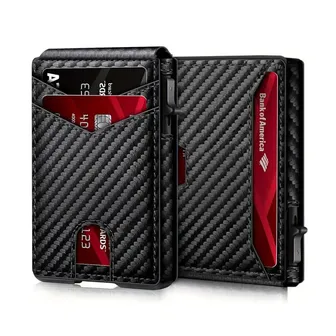
Carbon-Fibre RFID Pop-Up Card Holder (ID Window)
$13.79
The card that knew where the wallet was
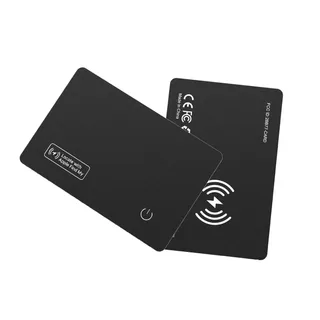
The card-shaped Bluetooth tracker, about $11, is a black card the thickness of two credit cards that slid into the back slot of the passport organiser and showed up on a phone’s Find My map. On day four one of us left the organiser on a cafe table in Gràcia, and we were two streets away before the other noticed. The map showed it where we had been sitting before we had finished panicking; the waiter had it behind the bar. It needs passing phones to report its position, so in a city it updates constantly and on an empty beach it goes quiet, and you should check it works with your phone before you order.
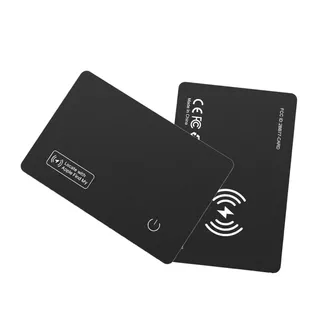
Card-Shaped Bluetooth Tracker (Works with Find My)
$10.95
The flight was uneventful, which is the best thing a flight can be. By lunchtime on the first day we had discovered the second category of thing we lose.
Day two, noon — the small stuff on the cafe table
Small things are the ones that go. Earbuds, the adapter, lip balm, a key, the little cable. Every cafe table in Barcelona is a place to leave one of them, and we sat at a lot of cafe tables.
The pouch for everything smaller than a phone
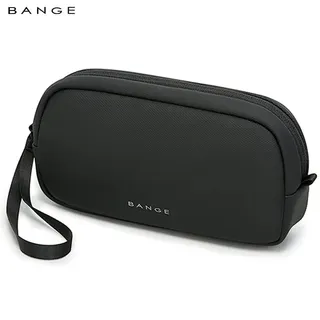
The BANGE mini gadget pouch, about $11, is a soft zip pouch slightly bigger than a phone, with a divider and elastic loops for cables. Earbuds, the adapter, lip balm, a spare key and the short cable went in on the first morning, and the rule was simple: if it is smaller than a phone and not in your hand, it is in the pouch, and the pouch is in the bag. We reached into it perhaps a dozen times a day. It offers no protection — the earbuds case inside has a scuff from being sat on — but we still have every one of those things.
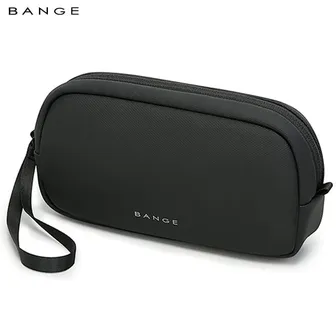
BANGE Mini Electronics Pouch
$10.85
The case for the phone on the beach
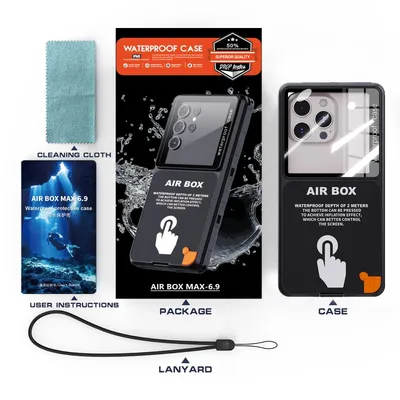
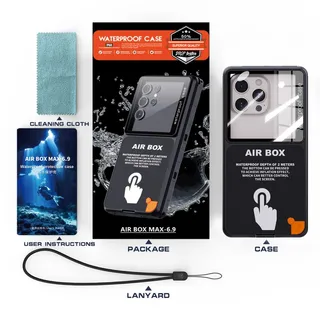
The Air Box IP68 waterproof phone case with lanyard, about $9, is a rigid sealed case with a clear touchscreen front and a strap. On the beach at Barceloneta a phone in a towel is a phone waiting to be sand-filled or walked off with while you swim, and one of us has lost a phone exactly that way. In the case, hanging from a wrist in the water or round a neck on the sand, it was simply on a person all afternoon. A button on the base presses the air out so the screen still works. Photographs through the front are soft, and it fits phones up to about 6.9 inches with no thick case already on.
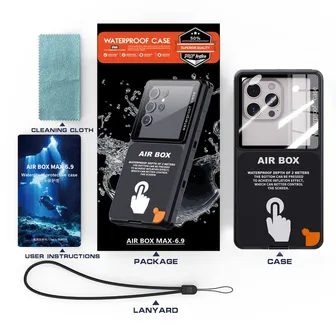
Air Box IP68 Waterproof Phone Case with Lanyard (Touchscreen Front)
$8.85
By the third day the small stuff and the documents had homes, and we were ready for the thing we had been dreading: the metro at rush hour.
Day three, 8.30 a.m. — the metro at rush hour
Everyone in Barcelona will warn you about the metro, and everyone is right. It is also the quickest way across the city, so we took it, and the bag that held the whole system had its one real test.
The bag you could see into
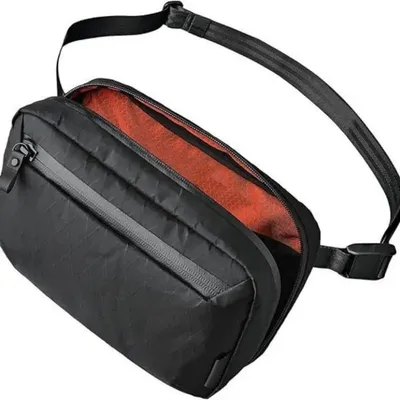
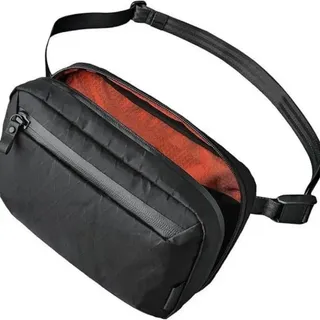
The X-Pac crossbody sling bag, about $16, is a compact sling in stiff, water-resistant sailcloth with a bright orange lining. The lining is the feature: open the zip an inch and a black wallet, a black card holder and a black pouch are all visible against the orange, and a glance tells you everything is still there. The main zip sits against your body, and the strap adjusts so the bag rides high on your chest, where in a crowded carriage one of us kept a hand on it anyway — it is a good bag, not a vault; the zips do not lock and the fabric is tough rather than slash-proof. It holds the organiser, the card holder, the pouch, a phone and a small bottle exactly, and nothing more; we carried a tote for jumpers.
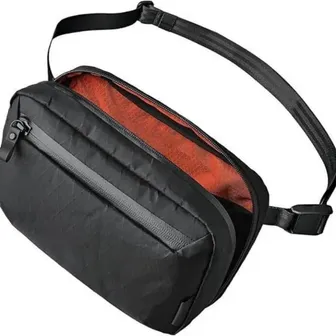
X-Pac Crossbody Sling Bag (Bright Orange Lining)
$16.25
We came out at Sagrada Família with everything we went in with, which we celebrated more than the building. The last part of the system was the one we used every night.
11 p.m. — the hotel room, every night
Hotel rooms are where the dull losses happen. Nothing is stolen; things are simply left — in the wall, in the safe, in the drawer by the bed. We had two things for the room, one for sleeping and one for leaving.
The lock that made the door ours
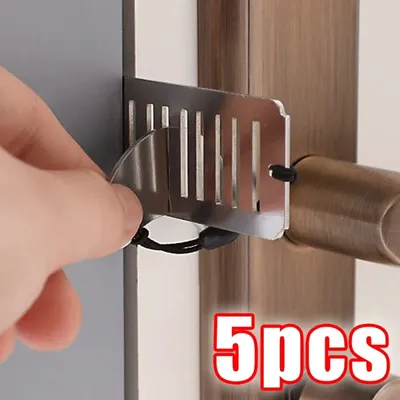
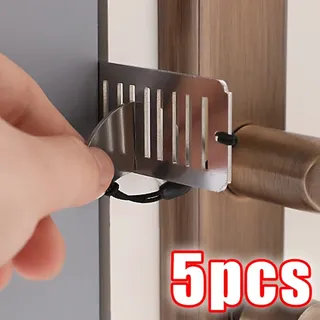
The portable door lock for hotel rooms, about $20, is a steel plate that slips into the strike plate of an inward-opening door, with a lock that drops over it from inside. It took about ten seconds to set the first night and five every night after, and it means the door cannot be opened from outside even with a key card. We slept better for it, in a ground-floor room with a door onto a shared courtyard, and nobody from the hotel noticed or minded. It only fits inward-opening doors with a standard strike plate, which was every room we stayed in, and we would not use it where someone else might need to get out fast while we slept.
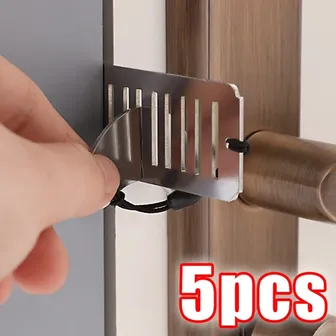
Portable Door Lock for Hotel Rooms (No Tools)
$20.09
The bag the chargers went back into
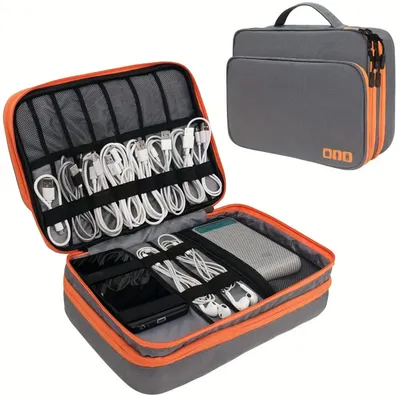
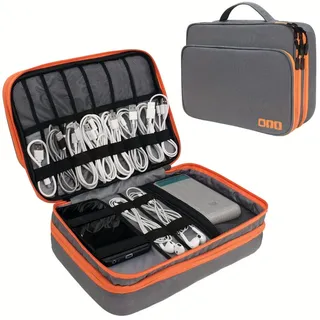
The multi-layer cable and charger organiser bag, about $14, is a grey zip bag with two padded layers of elastic loops, mesh pockets and a divider, and it is the reason we came home with every charger we left with. The routine was unglamorous: every night, before bed, the laptop charger, both phone chargers, the adapter and the cables came out of the wall and went back into their loops, and the bag went on top of the suitcase. It sounds like a chore and took ninety seconds. Full, it is the size and weight of a hardback and the heaviest small thing we carried; with one phone and one cable it is far too much bag.
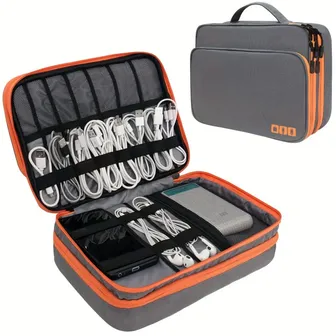
Multi-Layer Cable and Charger Organiser Bag
$14.49
On the last morning we did the last look — sockets, safe, drawer, bathroom shelf — and found nothing, because there was nothing to find. We flew home with two passports, every card, every charger and the same number of earbuds we had set out with. It is the first time in years. The system is not interesting, but it works, and we are keeping it.
What we’d leave at home
Everything in this story
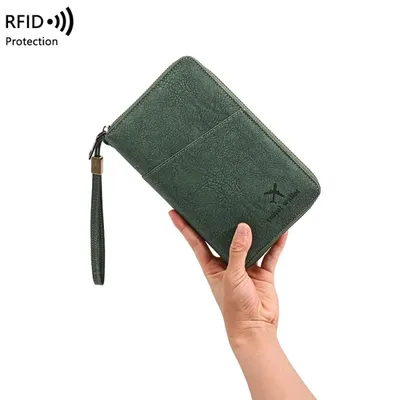
RFID-Blocking Passport & Travel Document Organiser
$11.75
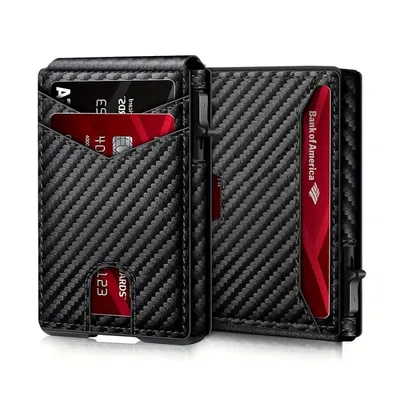
Carbon-Fibre RFID Pop-Up Card Holder (ID Window)
$13.79
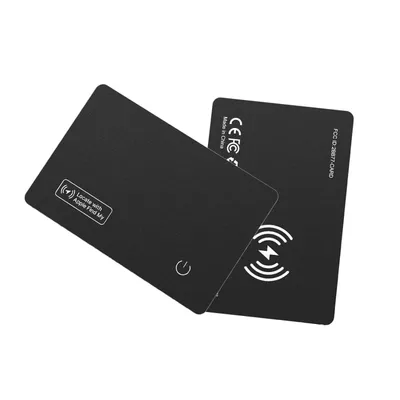
Card-Shaped Bluetooth Tracker (Works with Find My)
$10.95
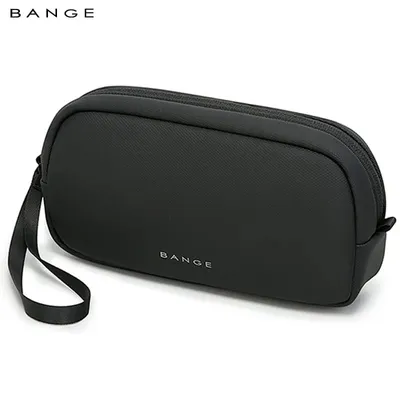
BANGE Mini Electronics Pouch
$10.85
Air Box IP68 Waterproof Phone Case with Lanyard (Touchscreen Front)
$8.85
X-Pac Crossbody Sling Bag (Bright Orange Lining)
$16.25
Portable Door Lock for Hotel Rooms (No Tools)
$20.09
Multi-Layer Cable and Charger Organiser Bag
$14.49
Everything here comes to about $107. Prices in USD; they move a little from week to week.
Frequently asked questions
How do I stop losing things when I travel?
Give every object one place it lives, and put it back there every single time, even when you are tired. For us that meant a document wallet for the paperwork, a card holder for the cards, a small pouch for the small things, a cable bag for every charger and a bag with a bright lining to hold all of it. The whole system cost about $107.
Is a cheap crossbody bag safe enough for a city with pickpockets?
Safe enough, if it sits on your front and the zip faces your body. The sling in this story cost about $16 and did both; it is not slash-proof and has no locking zips, so in a crowded metro one of us kept a hand on it. The bright lining did more for us than any security feature, because we could see at a glance that everything was still inside.
Do wallet trackers actually work for travel?
Yes, in cities, because they rely on passing phones to report where they are. A card-shaped tracker in the passport wallet cost about $11, and when we left the wallet in a cafe on day four the map showed it before we had finished panicking. In the countryside or on an empty beach, it goes quiet.
Are portable door locks allowed in hotels?
Almost always, because they do not damage the door and come off in a second. They only fit inward-opening doors with a standard strike plate, which is most hotel rooms. Do not use one if someone else sharing the room might need to get out in a hurry while you are asleep.
What is the most common thing people leave in hotel rooms?
Chargers, by a distance, because they live in the wall rather than in a bag. Our fix was a cable bag that every charger went back into at night, no exceptions, and a last look at the sockets before checkout. It cost about $14 and it is the reason we came home with all of ours.