
The Sunday We Cooked All Week's Dinners: 10 Things That Made It Work
Two chaotic Sundays taught us where batch cooking fails: prep, seasoning and the fridge. The story of the third Sunday, and the ten things that made it work.
10 products8 min read
The two Sundays that went wrong
We started batch cooking in our second month in the flat, for the usual reason: weeknights were ending in toast. The idea was one long Sunday afternoon, five dinners in the fridge, and a week of reheating. The first Sunday took six hours and we were still chopping at four o’clock. The second Sunday the roast came out pink in the middle, the chilli was under-seasoned because both hands were busy, and by Wednesday nobody could tell which brown stew was which.
So before the third Sunday we sat down with a notebook and wrote down where the afternoon had actually broken: the prep, the seasoning and the fridge. Then we bought for those three moments and nothing else.
This is the story of the third Sunday, with the things appearing where they appeared for us.
1 p.m. — the prep that took longer than the cooking
The afternoon starts with a pile: six onions, a bag of carrots, three peppers, two heads of garlic, a kilo of mince and a chicken. On the first two Sundays this pile defeated a small board, a dull knife and two people taking turns at the one clear bit of counter.
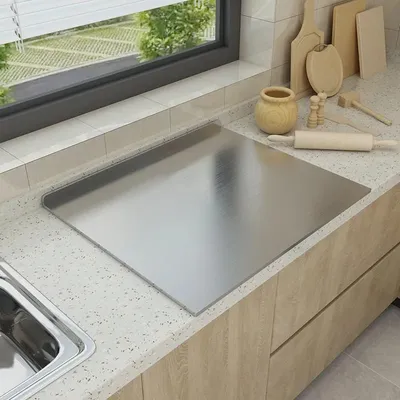
The board that fitted a week on it
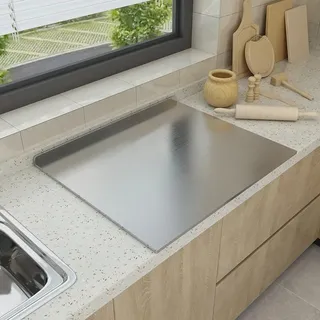
The stainless steel cutting board, about $30 and 60 by 40 centimetres, is the size of a small tray and the reason prep now happens in one place. Everything gets chopped and pushed to the far edge — onions in one pile, carrots in the next — without decanting into bowls every two minutes, and the whole board goes in the sink between the raw chicken and the salad. It is heavy, it rings like a bell under a knife, and steel dulls an edge faster than wood does, which is why the next two things exist.
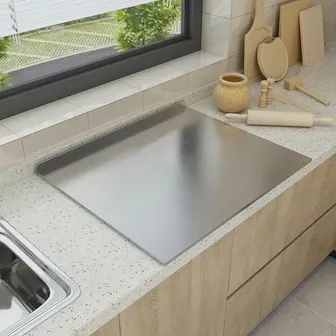
Stainless Steel Cutting Board, 60 x 40 cm
$29.89
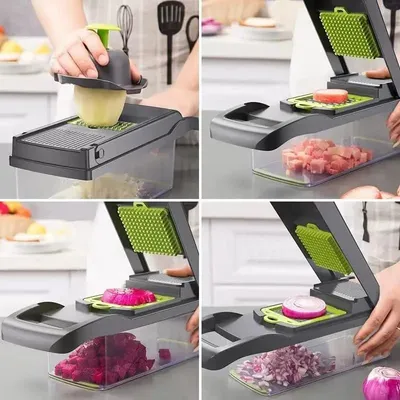
The chopper that did six onions in three minutes
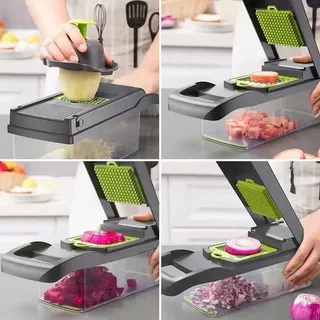
The 16-in-1 vegetable chopper and slicer, about $21, is a push-down dicer with a set of stainless blade grids and a clear catch box underneath. You lay half an onion on the grid, press the lid down, and a diced onion falls into the box. Six onions took about three minutes and nobody cried, because nothing lingered on the board. It also slices carrots and juliennes peppers with the other grids. The body is plastic and the grids need a careful hand-wash with the little cleaning comb; it is not a tool for ripe tomatoes, which it turns into soup.
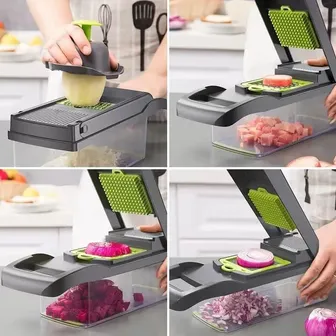
16-in-1 Vegetable Chopper and Slicer with Container
$20.99
The scale we could rinse
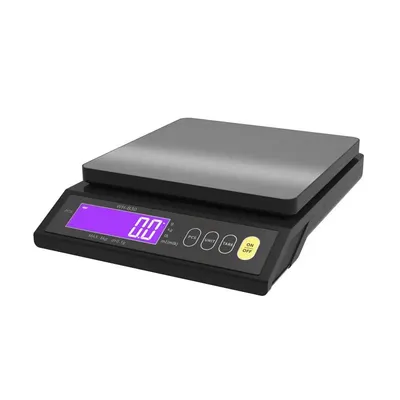
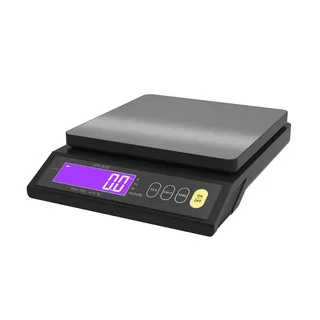
The waterproof digital kitchen scale, about $27, is a sealed scale with a 0.1-gram mode for spices and a 5-kilogram range for a whole pot of chilli, and it is the one we bought after stock got into the buttons of the old one. We weigh the mince for the chilli, the rice for the week, and then, at the end, the portions going into each container, so that Thursday’s dinner is the same size as Monday’s. It is pricier than a basic scale; if you never portion by weight, a plain one will do the first two jobs.
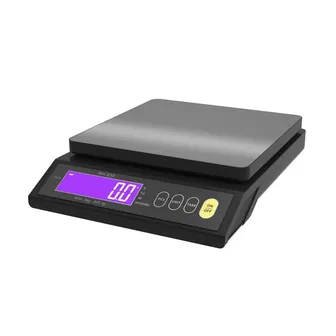
Waterproof Digital Kitchen Scale (5 kg / 0.1 g)
$27.09
The stone that made the knife a knife again
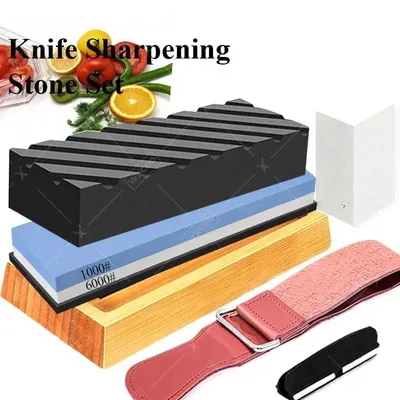
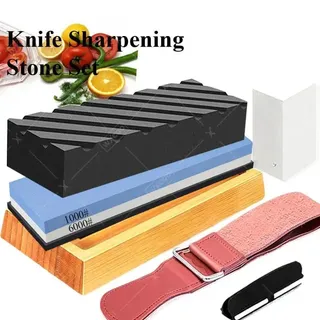
The WXCOO double-sided whetstone kit, about $13, is a two-grit water stone on a rubber base with a small plastic angle guide that clips onto the back of the blade. Ten minutes in water, ten minutes of long strokes on the coarse side and the fine side, and the chef’s knife that had been squashing peppers on the first Sunday went through them cleanly on the third. There is a learning curve, and the guide helps without doing it for you; the first attempt made the knife slightly sharper and our thumbs slightly less confident. It now happens every Sunday at one o’clock, before the onions.
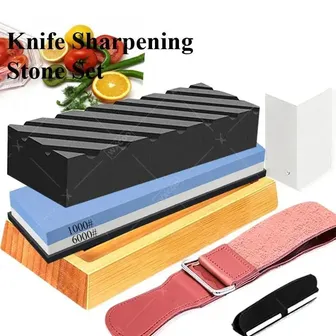
WXCOO Double-Sided Whetstone Kit with Angle Guide
$12.75
By two o’clock the board was clear, the knife was sharp and three pans were on. Which is when the second kind of chaos started.
2.30 p.m. — three pans, two hands
A batch afternoon has a point where the chilli needs stirring, the chicken needs checking and the sauce for the pasta needs salt, and you have two hands and no idea where the ladle went.
The grinders we could work one-handed
The rechargeable electric salt and pepper grinder set with a charging base, about $25, is two stainless mills that grind when you tip them, with a small light underneath so you can see how much has gone onto the pan. The point is one-handedness: the other hand keeps stirring. Coarseness is adjustable at the bottom of each. One of us thinks they are overkill, and for a single pan they are; a pair of manual mills does the job at half the price. For three pans at once, they stayed.

Rechargeable Electric Salt and Pepper Grinder Set with Base
$24.89
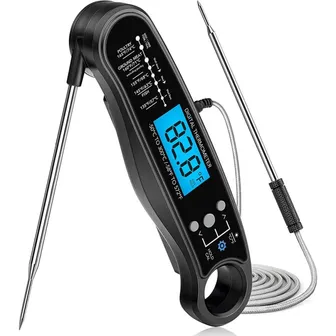
The thermometer that ended the pink chicken
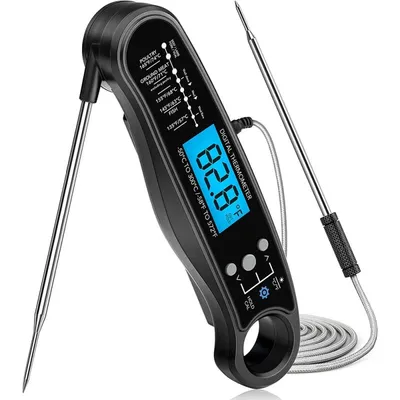
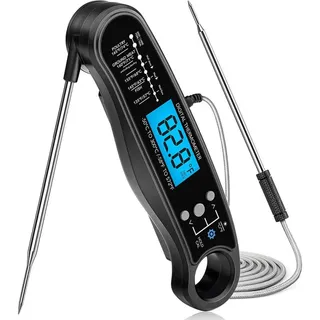
The dual-probe digital meat thermometer, about $11, has a fold-out instant-read probe for the pan and a second probe on a long braided lead that goes into the roast and stays there, with the door shut, and beeps when it hits the temperature you set. The chicken came out at 74 degrees in the thigh, carved clean and was not pink anywhere, for the first time in three Sundays. The lead is fiddly to thread past the oven door seal, and it is wired rather than wireless, so the display sits on the counter next to the oven rather than in your pocket.
Dual-Probe Digital Meat Thermometer (Instant + Oven)
$10.62
The caddy that gave the ladle a home
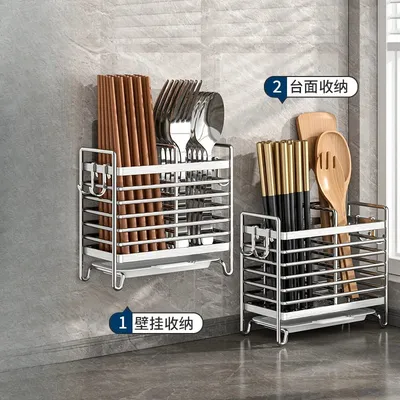
The no-drill wall-mounted stainless steel utensil caddy, about $13, is a wire basket with a drip tray that sticks to the tiles beside the hob. The ladle, the tongs, the wooden spoon and the spatula stand upright in it, within reach of all three pans, instead of lying on the counter in a widening puddle. The adhesive wants clean smooth tiles and a day to cure before you load it; we stuck it on the Saturday night. If your wall is painted plaster, it also stands on the counter, which is less tidy and still better than the puddle.

No-Drill Wall-Mounted Stainless Steel Utensil Caddy
$12.99
By half past four everything was cooked and cooling, and we faced the part of the afternoon that had actually defeated us the week before.
5 p.m. — into the fridge, with names
The second Sunday’s dinners went into the fridge as six anonymous containers. By Wednesday we had eaten chilli three times and found the chicken on Friday. The problem was not the cooking; it was the labelling, and the fact that the counter we needed for lining up the containers was covered in cling film and foil.
The label maker that ended the brown-stew lottery
The Niimbot B1 portable thermal label maker, about $36, is a hand-sized printer that pairs with a phone and prints a two-inch sticky label in a few seconds: “Chilli — Sun 12 Oct”, “Chicken, rice — Sun 12 Oct”. Every container now goes in with a name and a date, and the week stops being a guessing game. The labels peel off the lids cleanly in the wash, which the masking tape we tried first did not. It is, admittedly, a gadget: label rolls are a running cost, and tape and a marker do the same job for a tenth of the price. We bought it because it made the habit stick, and the habit is what matters.

Niimbot B1 Portable Thermal Label Maker
$36.29
The shelf on the side of the fridge
The magnetic side shelf for the fridge, about $17 for two, is a pair of steel trays with a lip and a hook that clamp magnetically to the exposed side of the fridge. The cling film, the foil, the roll of labels and the spare lids went onto them, and the counter they had been occupying was suddenly free for lining up ten containers. They hold more weight than they look like they should. They are also only for a fridge with a steel side; an integrated fridge behind a cupboard door gives them nothing to hold on to.

Magnetic Side Shelf for Fridge (2-Pack)
$16.62
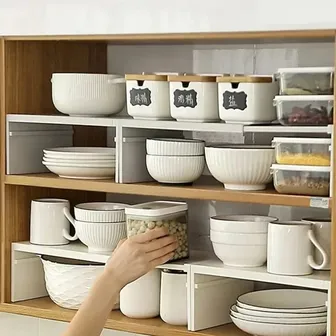
The shelf that gave the empty containers a home
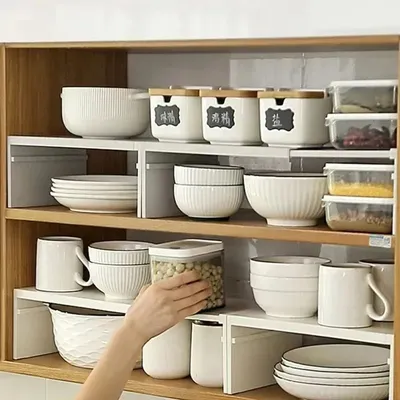
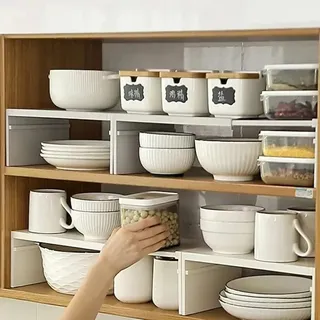
The stretchable cabinet shelf riser, about $13, is an expanding shelf that stands inside a cupboard and turns one level into two. On Sunday evening the full containers go in the fridge; on Friday the empties come back, and before this they came back into a cupboard where they fell out every time the door opened. Now the boxes stand on the floor of the cupboard and the lids live on the riser above them, and the door opens without a warning. It is a plastic-and-steel riser rather than a heavy-duty shelf, so the cast-iron pan stays on the cupboard floor where it was.
Stretchable Cabinet Shelf Riser for Containers
$13.29
We finished at half past five, an hour and a half earlier than the first Sunday, with ten labelled containers in the fridge and a clean counter. On Wednesday we ate the chicken, on purpose.
What we’d leave at home
Everything in this story
Stainless Steel Cutting Board, 60 x 40 cm
$29.89
16-in-1 Vegetable Chopper and Slicer with Container
$20.99
Waterproof Digital Kitchen Scale (5 kg / 0.1 g)
$27.09
WXCOO Double-Sided Whetstone Kit with Angle Guide
$12.75

Rechargeable Electric Salt and Pepper Grinder Set with Base
$24.89
Dual-Probe Digital Meat Thermometer (Instant + Oven)
$10.62
No-Drill Wall-Mounted Stainless Steel Utensil Caddy
$12.99

Niimbot B1 Portable Thermal Label Maker
$36.29

Magnetic Side Shelf for Fridge (2-Pack)
$16.62
Stretchable Cabinet Shelf Riser for Containers
$13.29
Everything here comes to about $205. Prices in USD; they move a little from week to week.




Frequently asked questions
What do I need to start batch cooking on a Sunday?
A big board, something that chops faster than you do, a scale for portioning and a thermometer so you stop guessing when the roast is done. Those four came to about $89 for us. The full ten-item kit in this story was about $205, and most of the rest is about keeping the afternoon tidy.
Is a cheap vegetable chopper worth it or just another gadget?
For batch cooking, worth it. One onion by hand is fine; six onions, four carrots and three peppers for a week of dinners is forty minutes of chopping that a push-down chopper does in ten. For a single weeknight dinner, stick with the knife.
How do I keep track of what's in the fridge after a cook-up?
Label everything with the dish and the date before it goes in. We tried remembering and ate the same chilli three nights running by accident. A hand-sized label printer at about $36 made it a habit; masking tape and a marker do the same job for a fraction of the cost.
Do I need a whetstone or is a pull-through sharpener enough?
For a knife you will use for four hours every Sunday, a whetstone. A pull-through is quick but grinds steel away; a two-grit stone with an angle guide takes ten minutes and leaves a better edge that lasts the session. The kit we use cost about $13.
What's the one thing most people forget for batch cooking?
Somewhere for the tools to live while three pans are going. A ladle on the counter is a puddle; a caddy on the wall by the hob is a ladle you can find. It cost us about $13 and it is the thing we'd buy first next time.